

The sacrificial garden
If you can't beat 'em, give 'em what they want

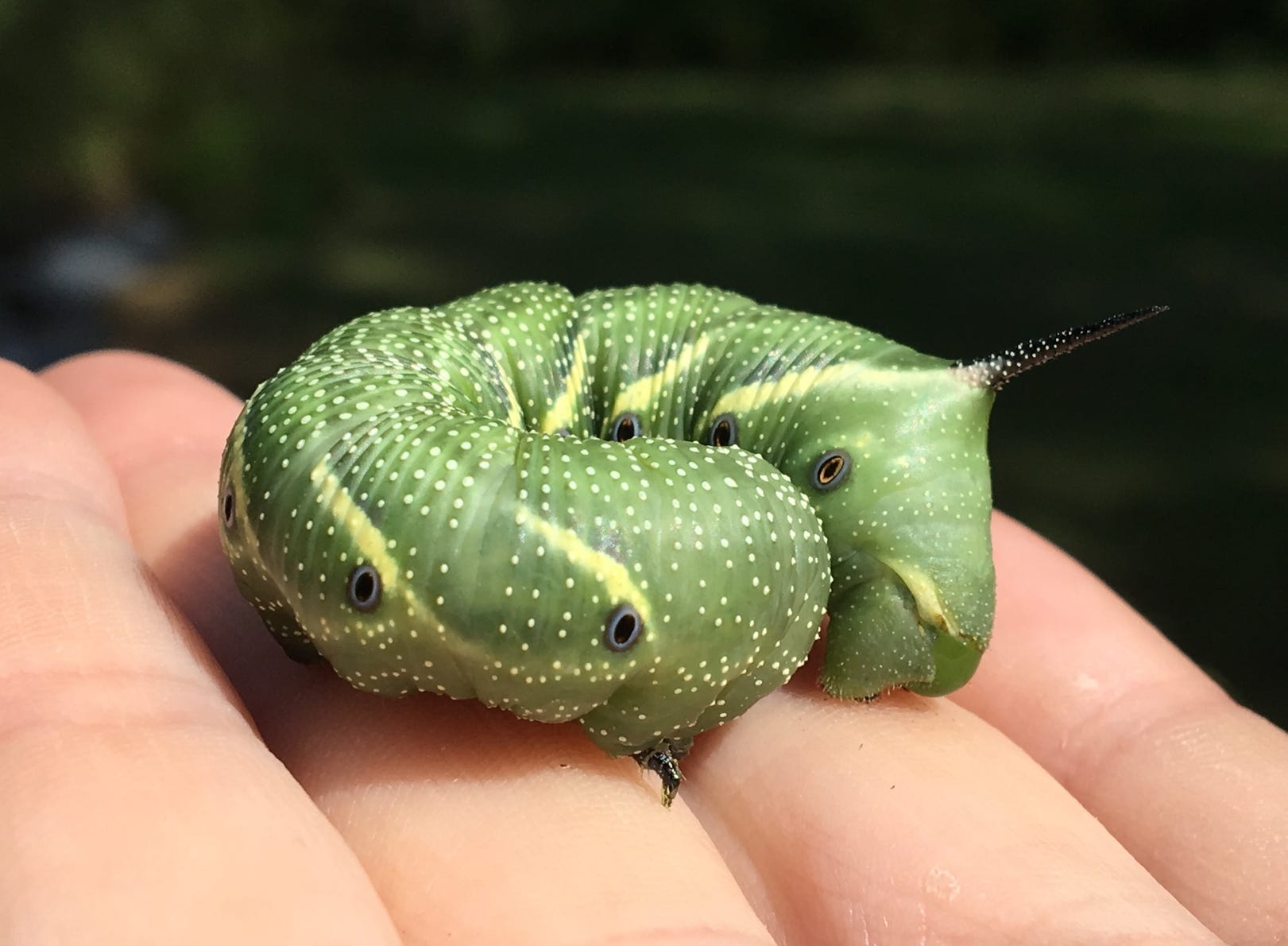
Would you believe that I have never seen a tobacco hornworm in my garden? Or a tomato hornworm, for that matter. I came to this realization as I went looking for photos of their adult form, beautiful large sphinx moths in the genus Manduca.
Tobacco hornworms are the caterpillars of M. sexta, known in its adult form as Carolina Sphinx. These are found in southern Ontario, and also in the Montreal, Quebec, region, but strangely not in eastern Ontario where I live, so it’s not that surprising that I don’t have any records of them. (I did grow up, and begin mothing, within their Ontario range, however.)
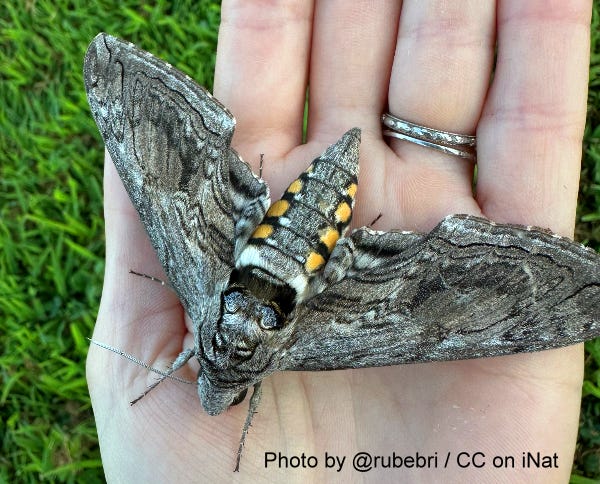
Tomato hornworms, M. quinquemaculatus, are as adults known as Five-spotted Hawkmoths (photo below). This species is encountered fairly commonly throughout southern Ontario, but in a weird range pattern reversal to Carolina Sphinx, is found only sparsely in the adjoining states. I have a single record of this species in my iNaturalist account, a caterpillar that was enjoying my sister’s tomato plants one summer when I was visiting
Hornworms have given me no trouble personally, but I know some gardeners find them a real headache. Because the caterpillars can get so large, they can go through quite a lot of foliage in a single day, and skeletonize an entire tomato bush seemingly overnight. Get a small collection of these critters and your harvest takes a real hit. (They don’t tend to prefer the fruit, and the plants do usually bounce back, but flower production decreases or stops as the plants have to put more energy into growing new leaves.)
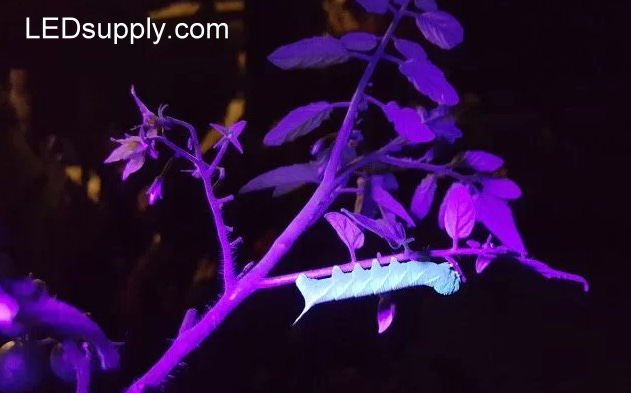
A cool thing about some caterpillars - including both species of hornworm - is that they glow under blacklight. You can get a cheap LED blacklight off Amazon, or someplace like LEDsupply.com (from whose blog I borrowed the below photo), and go out to your garden after dark to see if you can spot any. The earlier you catch them, the less damage they’ll do to your plants, and they can hatch and grow quickly so it’s recommended to go out and look every night or two.
Apparently chickens quite like the caterpillars, if you happen to have some. If you don’t, then you can drown them or otherwise dispose of them. But, as a moth lover, it would hurt my heart to do either of these things. They’re native species, after all. And the adults are beautiful and amazing. (Quite frankly, so are the caterpillars.) They’re just on plants we’d rather they not be on.
Before we introduced delicious tomato plants to our gardens, Carolina Sphinx and Five-spotted Hawkmoth would (of course) lay their eggs on native species. Tomatoes are members of genus Solanum, the nightshades, and there are several wild species, both native and introduced, in this group. However, both hornworm species have a pretty broad repertoire of host plants:
Carolina Sphinx (tobacco hornworm) will use nightshade, groundcherry, wild lettuce, wolfberry, and native canna lilies, as well as non-native species like mustards.
Five-spotted Hawkmoth (tomato hornworm) will use nightshade, groundcherry, wolfberry, caltrop, and a few non-native species including dandelions.
If you happen to live in an area with these plant species around in abundance, you can just move your hornworm caterpillars there. Or you could try raising them yourself in a tabletop screen enclosure. Certainly dandelions shouldn’t be hard for most people to find!
But maybe you don’t have their wild host plants nearby or convenient to you, and you aren’t interested in hand-raising them, either.
Consider growing a sacrificial garden.
If you have the extra garden space, buying extra tomato plants from the nursery is pretty cheap, especially if you get them at the end of the garden centre season when stuff is on clearance. Set aside a section of the garden to plant with tomatoes, the ones you don’t care if you get fruit from or not. And then, if and when you get hornworms, pluck them off your good plants and put them in the sacrificial garden. Since caterpillars can’t fly or jump, you can prevent them from returning to your good plants by building a little moat, putting an inverted jello mold (or similar) filled with water around your seedlings when you plant them, or using some other barrier. I’ve read ground cinnamon or cinnamon oil can work as an insect repellent, too.
Don’t forget to check your nectar-rich garden flowers at dusk to try to catch the adults visiting them. :)
Since I don’t have either of the Manduca sphinxes, I don’t need to worry about my tomatoes. I do usually have trouble with Cabbage White caterpillars on my broccoli (doesn’t everyone?) but they can be deterred by putting floating row cover over the plants. (And I have tried multiple years to grow dill specifically to entice swallowtail caterpillars, but for some reason have struggled to get the dill to take.)
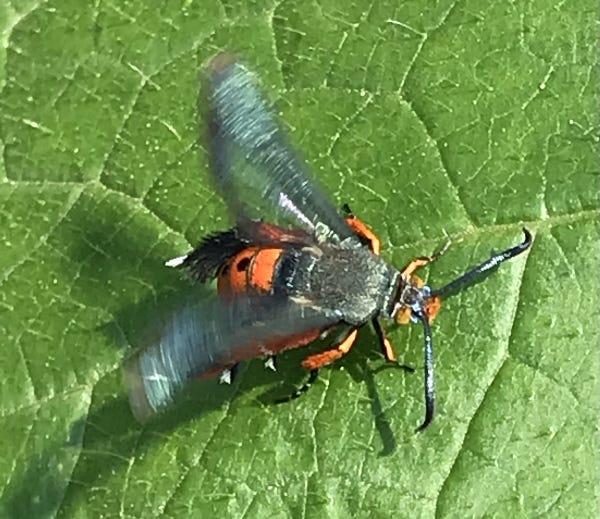
My personal problem plant in the veggie garden is squash. Pumpkins, zucchini, acorn squash. All the members of Cucurbita pepo and C. maxima. The Squash Vine Borer moths love them, and I seem to have a healthy population of this moth species. (And yet somehow all I’ve ever managed to capture of them is this somewhat poor photo above.)
I’ve seen a variety of advice on how to protect plants against squash borers. One is to wrap the stem in aluminum foil, but that seems like a lot of work, and not terribly effective for bush-style plants. Using diatomaceous earth on the soil at the base of the stem can apparently protect the caterpillars from burrowing down into the dirt. Placing a row cover over the plants when young supposedly keeps the adult moths from laying their eggs in the first place, but how do you do that with a trellised vine?
I’ve taken the route of just not growing C. pepo and C. maxima. Instead, I’ve turned to the other two common domestic squash species: C. moschata (butternut and tromboncino squash) and C. mixta (now C. argyrosperma due to taxonomic updates but not always updated at seed companies etc, this is mainly green-striped cushaw). These varieties are infrequently targeted by squash borer moths, and I’ve had great success growing them each year.
I do like the Squash Vine Borer moths, though. Maybe this year I’ll offer a sacrificial garden of my own, some zucchini plants for them to use, or pumpkin vine. If they do, perhaps I’ll finally get the chance to photograph the adults. And if they don’t come round, I’ll have an abundance of squash.

Love this! I might quote you on my Nature-Culture blog.